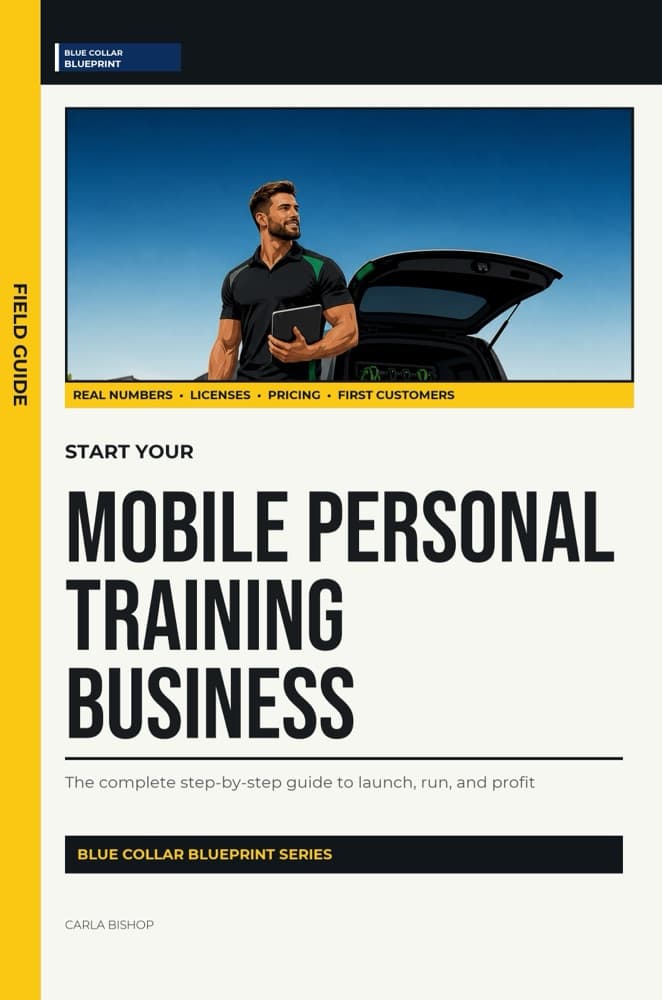
The Complete Step-by-Step Guide to Launch, Run, and Profit from Your Own Mobile Personal Training Business
Use the field guide for trade-specific direction, then use the companion tools to build the numbers, documents, and routines behind the work.
This title is currently in production.
What this guide covers
Build the business before the work starts.
Mobile personal training can be a practical service business for trainers who want to work outside the traditional gym model. Instead of waiting for clients to come to a facility, you bring coaching, equipment, accountability, and structure to homes, apartment gyms, parks, offices, and small group settings. That flexibility creates opportunity, but it also creates real operating challenges: travel time, parking, scheduling gaps, sanitation, liability, weather plans, client screening, and clear professional boundaries.
This book is written for new and early-stage operators who want a grounded path into the business. Whether you are a certified trainer leaving a gym, building a part-time route around another job, or turning referrals into a real company, it shows how to think through setup, startup costs, service area, pricing, client agreements, insurance, and marketing before you overbuy equipment or underprice your time.
Inside, you will learn how to:
Straight answers
Questions readers ask before they start.
These answers summarize the guide and point to the planning tools that help turn a decision into a working system.
What does Start Your Mobile Personal Training Business cover?
Mobile personal training can be a practical service business for trainers who want to work outside the traditional gym model. Instead of waiting for clients to come to a facility, you bring coaching, equipment, accountability, and structure to homes, apartment gyms, parks, offices, and small group settings. That flexibility creates opportunity, but it also creates real operating challenges: travel time, parking, scheduling gaps, sanitation, liability, weather plans, client screening, and clear professional boundaries.
Who is Start Your Mobile Personal Training Business for?
This book is written for new and early-stage operators who want a grounded path into the business. Whether you are a certified trainer leaving a gym, building a part-time route around another job, or turning referrals into a real company, it shows how to think through setup, startup costs, service area, pricing, client agreements, insurance, and marketing before you overbuy equipment or underprice your time.
What should I work through before I launch?
Start with the decisions that shape cost, risk, and operations: Choose your niche: Define the type of clients you are best positioned to serve, such as busy professionals, seniors cleared for exercise, general weight-loss clients, small groups, youth conditioning, or corporate wellness accounts. Set up legally: Understand business registration, EIN basics, local business licenses, home-office rules, park permits, tax registration, and why personal training credentials are usually market and insurance requirements rather than universal government licenses. Buy the right equipment: Build a portable kit with dumbbells, kettlebells, resistance bands, mats, suspension straps, medicine balls, cones, first-aid supplies, and storage systems without filling your vehicle with gear you rarely use.
Do the companion tools replace local professional advice?
No. The calculators, worksheets, and checklists help organize planning decisions, but local rules, taxes, licensing, insurance, contracts, and technical standards must be verified with the responsible agencies and qualified professionals.
Companion packet
Working tools for this blueprint.
Start with the same financial and operating fundamentals every service business needs. Trade-specific documents can be added without changing this permanent book page.