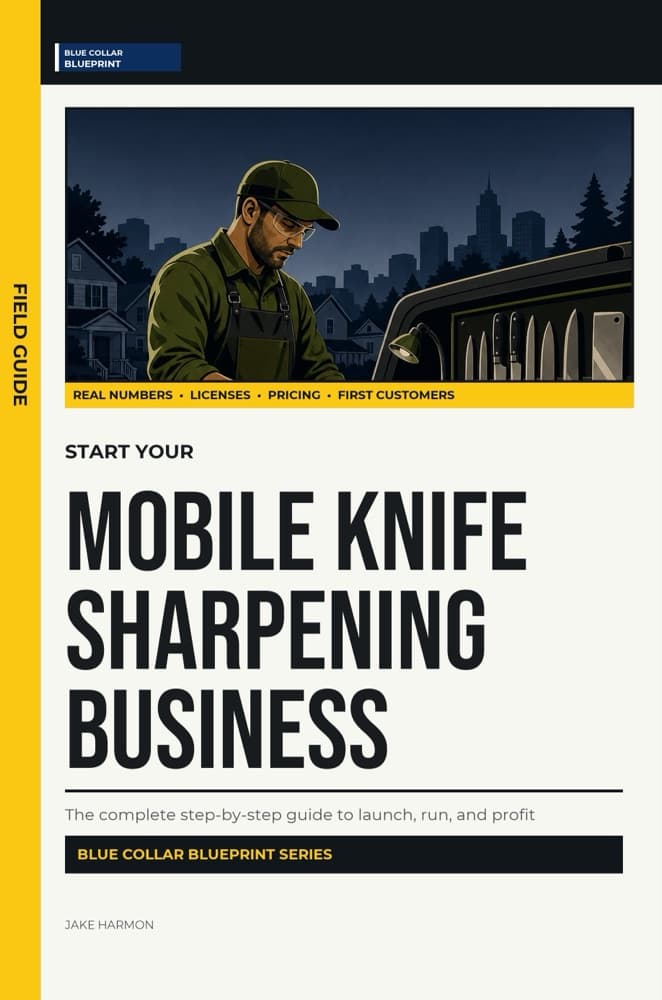
The Complete Step-by-Step Guide to Launch, Run, and Profit from Your Own Mobile Knife Sharpening Business
Use the field guide for trade-specific direction, then use the companion tools to build the numbers, documents, and routines behind the work.
This title is currently in production.
What this guide covers
Build the business before the work starts.
Mobile knife sharpening is a small service business built on skill, trust, route density, and repeat customers. The work can be started lean with a reliable sharpening setup and local marketing, but the business only works when pricing covers drive time, setup time, insurance, blade condition, customer communication, and the cost of doing careful work.
This book is written for people who want a field-ready path into sharpening kitchen knives, restaurant knives, scissors, garden tools, and related edge work without pretending the trade is automatic. It helps first-time owners understand startup costs, legal basics, equipment choices, customer acquisition, recurring accounts, and the operational habits that protect both reputation and profit.
Inside, you will learn how to:
Straight answers
Questions readers ask before they start.
These answers summarize the guide and point to the planning tools that help turn a decision into a working system.
What does Start Your Mobile Knife Sharpening Business cover?
Mobile knife sharpening is a small service business built on skill, trust, route density, and repeat customers. The work can be started lean with a reliable sharpening setup and local marketing, but the business only works when pricing covers drive time, setup time, insurance, blade condition, customer communication, and the cost of doing careful work.
Who is Start Your Mobile Knife Sharpening Business for?
This book is written for people who want a field-ready path into sharpening kitchen knives, restaurant knives, scissors, garden tools, and related edge work without pretending the trade is automatic. It helps first-time owners understand startup costs, legal basics, equipment choices, customer acquisition, recurring accounts, and the operational habits that protect both reputation and profit.
What should I work through before I launch?
Start with the decisions that shape cost, risk, and operations: Plan your launch: Compare lean, moderate, and well-equipped startup paths so you can choose a vehicle setup, sharpening system, power source, safety gear, and booking process that match your budget and local market. Handle permits and setup: Work through business registration, tax registration, city or county licensing, mobile vendor rules, farmers market requirements, parking limits, signage rules, and local knife transport concerns before you start taking paid jobs. Choose equipment wisely: Understand guided systems, water-cooled sharpeners, belt sanders, jigs, abrasives, strops, scissor setups, blade guards, lighting, generators, and payment tools without overspending before you have paying demand.
Do the companion tools replace local professional advice?
No. The calculators, worksheets, and checklists help organize planning decisions, but local rules, taxes, licensing, insurance, contracts, and technical standards must be verified with the responsible agencies and qualified professionals.
Companion packet
Working tools for this blueprint.
Start with the same financial and operating fundamentals every service business needs. Trade-specific documents can be added without changing this permanent book page.